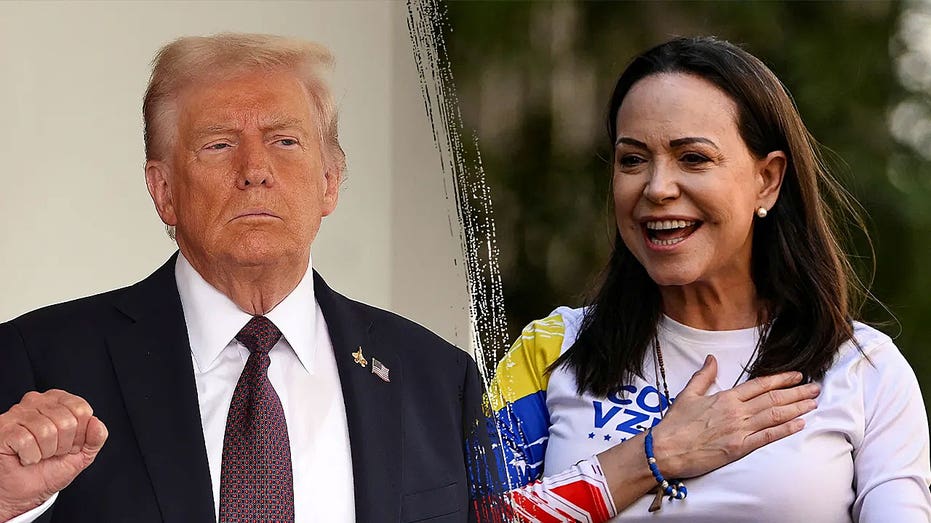
A surprising turn unfolded as President Trump prepares to host Venezuelan opposition leader María Corina Machado at the White House, despite a controversial decision regarding Venezuela’s future leadership.
Just days prior, Trump announced the capture of dictator Nicolás Maduro and a U.S. interim governance of Venezuela, promising a path to stability. However, instead of embracing Machado – recently awarded the 2025 Nobel Peace Prize – Trump publicly questioned her capacity to lead.
“She doesn’t have the support within or the respect within the country,” Trump stated, acknowledging Machado as a “very nice woman” but doubting her national influence. This assessment sparked immediate intrigue and raised questions about the administration’s strategy.
Secretary of State Marco Rubio explained the decision stemmed from a desire to avoid repeating past foreign policy missteps, specifically those seen in the Middle East. He emphasized the unique dynamics of the Western Hemisphere and a different approach to intervention.
A classified CIA assessment, requested by senior policymakers, reportedly identified Maduro’s vice president, Delcy Rodríguez, as the most suitable candidate to oversee an interim government. This intelligence seemingly guided Trump’s unexpected choice.
Reports suggest Trump was privately displeased that Machado, not he, received the Nobel Peace Prize – an honor he reportedly coveted. However, the White House maintained that all decisions were based on pragmatic considerations.
The shift in support has resulted in Rodríguez now serving as interim president. Trump described a recent phone call with her as productive, praising her as a “terrific” person and highlighting significant progress in stabilizing Venezuela.
The focus of discussions between Trump and Rodríguez centered on crucial areas like oil, mineral resources, and national security. A deal was quickly struck for Venezuela to supply the U.S. with 50 million barrels of oil, to be sold immediately.
Rodríguez reciprocated the positive tone, describing the call as “courteous” and focused on a collaborative agenda for the benefit of both nations. She indicated a willingness to address outstanding issues between the two governments.
Paradoxically, Machado herself has publicly praised Trump for his role in removing Maduro, acknowledging the U.S. had exceeded expectations in its intervention. The upcoming White House meeting promises a complex and potentially revealing dialogue.
The White House has remained tight-lipped about the specific agenda for the meeting between Trump and Machado, leaving observers to speculate on the future direction of U.S. policy in Venezuela.