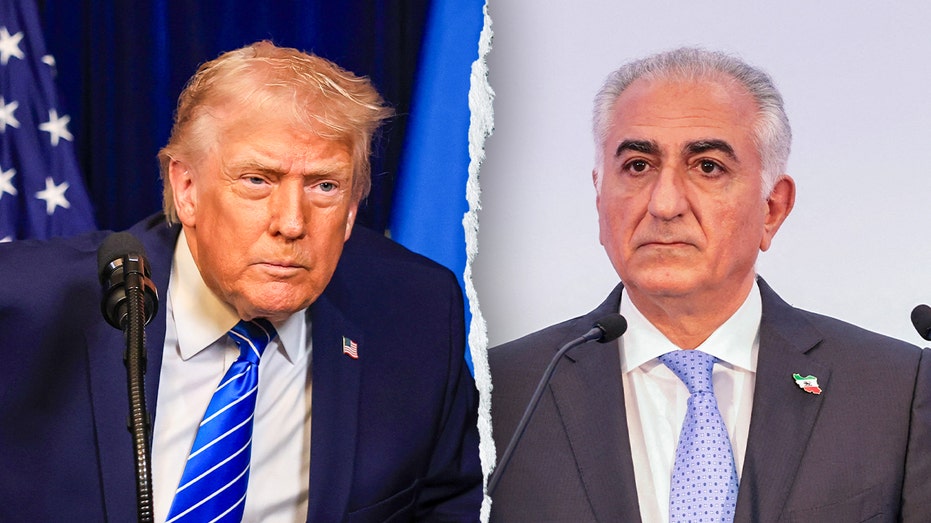
Former President Trump revealed a cautious perspective regarding the potential role of Reza Pahlavi, the exiled Iranian crown prince, in a post-regime Iran. During a recent interview, Trump acknowledged Pahlavi as appearing “very nice,” but expressed uncertainty about his ability to effectively lead within Iran itself.
He emphasized the situation hadn’t reached a point where such considerations were critical, questioning whether the Iranian people would even accept Pahlavi’s leadership. While not explicitly endorsing him, Trump stated he would have “no problem” with Pahlavi leading, should the country embrace him.
Trump has remained publicly uncommitted to Pahlavi’s aspirations since widespread protests ignited in Iran last month. Earlier, he’d voiced reservations about meeting with the crown prince, suggesting it might be premature to take sides amidst the ongoing unrest.
He’d indicated a preference for observing how the situation unfolded, allowing leaders to emerge organically from the protests. Trump described Pahlavi as a “nice person,” but maintained a distance, hesitant to appear to be influencing the outcome.
Pahlavi, however, has actively sought Trump’s support, making direct appeals during the escalating crisis. Following a nationwide internet blackout imposed by the Iranian regime, he issued an urgent plea on social media, urging Trump to prepare for potential intervention to aid the Iranian people.
In a televised interview, Pahlavi directly addressed Trump, highlighting the Iranian people’s admiration for his past policies and contrasting him favorably with previous administrations. He pointed to streets in Iran being renamed in Trump’s honor as evidence of this support.
Despite Trump’s public hesitations, reports surfaced of a private meeting between Pahlavi and prominent U.S. figures. The meeting allegedly included White House special envoy Steve Witkoff and Jared Kushner, Trump’s son-in-law, suggesting backchannel discussions were underway.
Pahlavi is reportedly positioning himself as a potential “transitional” leader should the current regime collapse, aiming to fill the power vacuum and guide Iran toward a new future. This strategy underscores his ambition to reclaim a role in his homeland.
The crown prince is the son of Mohammad Reza Pahlavi, the last Shah of Iran, whose decades-long rule ended with the 1979 Islamic Revolution. The revolution forced the royal family into exile, a situation from which Reza Pahlavi remains unable to return.
For over four decades, Pahlavi has lived outside Iran, a symbol of a bygone era and a potential figurehead for those seeking a return to a pre-revolutionary Iran. His continued efforts to engage with international leaders demonstrate his unwavering hope for a future return.
![ASTRONAUT EMERGENCY: NASA Rushes Crew Back to Earth – You Won't Believe Why! [VIDEO]](https://www.thegatewaypundit.com/wp-content/uploads/2026/01/crew-11-return-to-earth-splashdown.jpg)