Scott Adams’s life mirrored the shifting fortunes of modern media, a trajectory marked by both widespread acclaim and eventual controversy. He rose to prominence with Dilbert, a comic strip that captured the zeitgeist of the 1990s and early 2000s, a time when newspapers still held significant cultural sway. But his story wasn’t simply about ink and paper; it was about adaptation, reinvention, and the evolving landscape of public discourse.
Adams wasn’t a traditional cartoonist. He held degrees in economics and business, initially intending a career within the corporate world. Dilbert began as a “side gig” during his time at Pacific Bell, born from the frustrations and absurdities of office life. This unique perspective – an insider’s view filtered through a budding artist’s eye – resonated deeply with millions.
The Dilbert phenomenon was remarkable. It wasn’t just a funny strip; it offered a wry commentary on management, technology, and the daily grind. It possessed the gentle wit of Peanuts, a distinctive artistic style, and a focus on the uniquely modern experience of navigating the corporate landscape. Dilbert spoke to the water cooler conversations of a generation.
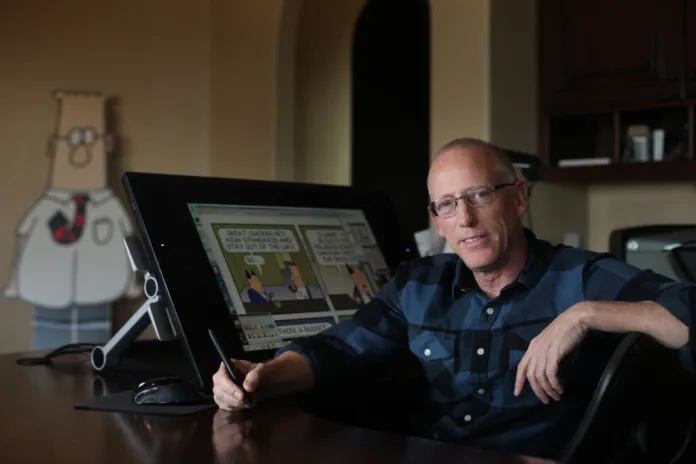
The strip’s success spawned a multitude of products – books, dolls, even an animated series. But the media landscape was changing. As newspapers began to decline, Adams anticipated the shift, recognizing the growing power of the internet. He wasn’t content to remain solely a cartoonist; he saw an opportunity to connect directly with an audience online.
He became an early adopter of livestreaming, launching “Real Coffee with Scott Adams” and offering his often-provocative takes on current events, particularly his support for Donald Trump. This new platform allowed him to engage in extended, unscripted commentary, revealing a sharp analytical mind and a calm, conversational delivery. He found a new voice, and a new audience.
However, the unfiltered nature of online communication proved to be a double-edged sword. In 2023, Adams made statements widely condemned as racist, leading to the cancellation of his syndicated strip. While Dilbert’s popularity had already waned, these remarks effectively ended its mainstream run. He moved the strip to a different platform, but the damage was done.
Despite a diagnosis of metastatic prostate cancer last spring, Adams remained active online, continuing to share his thoughts until shortly before his death at age 68. His story is a complex one, a reflection of our times – a journey from corporate employee to celebrated cartoonist to controversial internet personality, even earning a final acknowledgement from a former president.
Scott Adams’s life serves as a potent reminder of the ever-changing nature of influence and the enduring power of adapting to a new world. He navigated the peaks and valleys of media with a unique blend of creativity, business acumen, and a willingness to challenge conventional wisdom, leaving behind a legacy as multifaceted as the man himself.


