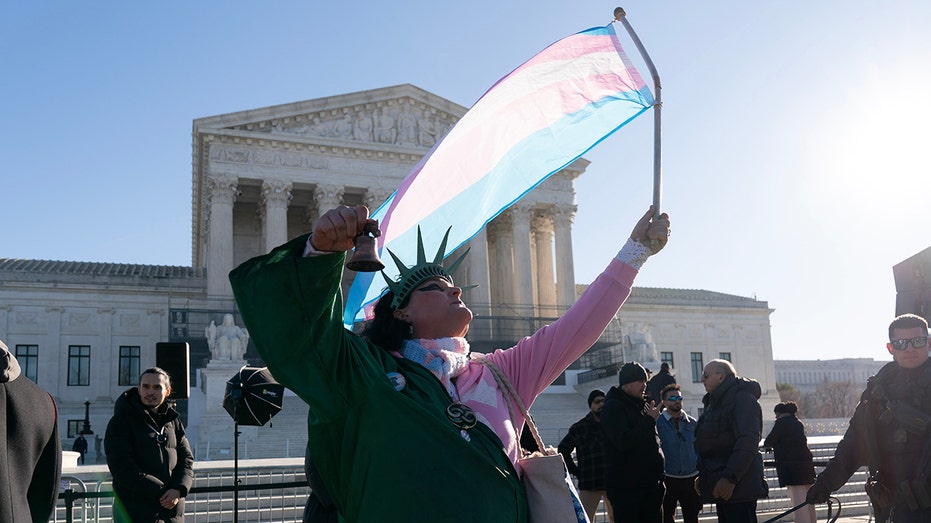
The nation held its breath this week as the Supreme Court wrestled with a question that cuts to the core of fairness in athletics: the future of women’s sports. But beneath the complex legal arguments lay a far more fundamental, and increasingly contentious, inquiry – what truly defines a woman?
The arguments, spanning an unusually long three hours across two landmark cases – *Little v. Hecox* and *West Virginia v. B.P.J.* – were marked by rigorous questioning from the justices. The focus centered on intricate legal standards, yet the underlying reality is stark. Across the country, a growing number of athletes born male are competing as girls, reshaping the landscape of competitive sports.
The consequences are becoming increasingly clear. Female athletes are losing coveted spots, scholarships are slipping away, and some are even facing physical harm from competitors with inherent physical advantages. A recent United Nations report revealed a disturbing trend: over 600 female athletes have lost over 890 medals to male athletes identifying as women in more than 400 competitions worldwide.
This surge has prompted over half the states to enact laws safeguarding women’s sports, maintaining separate participation based on biological sex. The cases before the Court directly challenge these protections. In Idaho, the question is whether laws protecting women’s sports violate the Equal Protection Clause. In West Virginia, the debate extends to whether Title IX allows states to define teams based on biological sex at birth.
Idaho’s “Fairness in Women’s Sports” law, the first of its kind in 2020, aimed to preserve opportunities for female athletes by linking participation to biological sex. Lindsay Hecox, a transgender woman, challenged the law after being barred from competing on the Boise State University women’s track team. Despite attempts to have the case dismissed, it reached the Supreme Court.
Similarly, West Virginia’s “Save Women’s Sports” law faced immediate legal challenges. B.P.J., an 11-year-old biological male identifying as female, sued to compete on girls’ teams. The law was paused while the case progressed, and reports emerged of B.P.J. displacing female competitors, even prompting some to withdraw from competition.
The core of the Idaho argument revolved around whether the law classifies based on sex or status. The state maintained it was based on biological sex, ensuring fair and safe competition by separating teams. Opponents argued it discriminated against transgender individuals, demanding a higher level of judicial scrutiny.
Justice Alito pressed the ACLU attorney representing the West Virginia athlete, questioning how a law treating all biological males and females equally could be considered status-based discrimination. Justice Jackson, however, appeared open to a case-by-case approach, suggesting schools could grant exceptions based on medical proof of no competitive advantage.
The debate took unexpected turns. Justice Gorsuch, who previously ruled that Title VII protections extend to transgender individuals, later suggested that sports, and the history of Title IX, presented a unique context. He questioned why the regulations governing sports shouldn’t be considered differently than those governing employment.
Justice Alito cut through the legal complexities, posing a fundamental question: “How can a court determine whether there is discrimination on the basis of sex without knowing what ‘sex’ means?” This question resonated throughout the proceedings, highlighting the central challenge of defining a core concept upon which the legal arguments rested.
The discussion then shifted to Title IX, the landmark 1972 law prohibiting sex-based discrimination in education. West Virginia argued its law aligned with Title IX’s purpose – ensuring equal opportunities for both sexes. The opposing side contended the law discriminated against an athlete based on their gender identity.
Chief Justice Roberts underscored the need for a clear definition of “sex” for consistent application of Title IX across thousands of schools. He argued that without a specific and objective meaning, fair administration of the law would be impossible.
Justice Alito echoed this sentiment, emphasizing that the purpose of separating teams is to account for inherent sex-based advantages, ensuring talented female athletes have equal opportunities. He questioned whether abandoning biological sex would undermine the very protections Title IX was designed to provide.
While acknowledging the potential harm to transgender athletes, Justice Kavanaugh highlighted the potential consequences for women’s sports. He recognized the remarkable progress made by women and girls in athletics over the past 50 years and expressed concern that allowing transgender women and girls to compete could jeopardize that success.
The arguments concluded after over three and a half hours, leaving the nation to await a decision expected in June. While a ruling favoring female athletes seems likely, the scope and specifics remain uncertain. And looming over everything is the ultimate question: will the Court finally define what it means to be a woman?