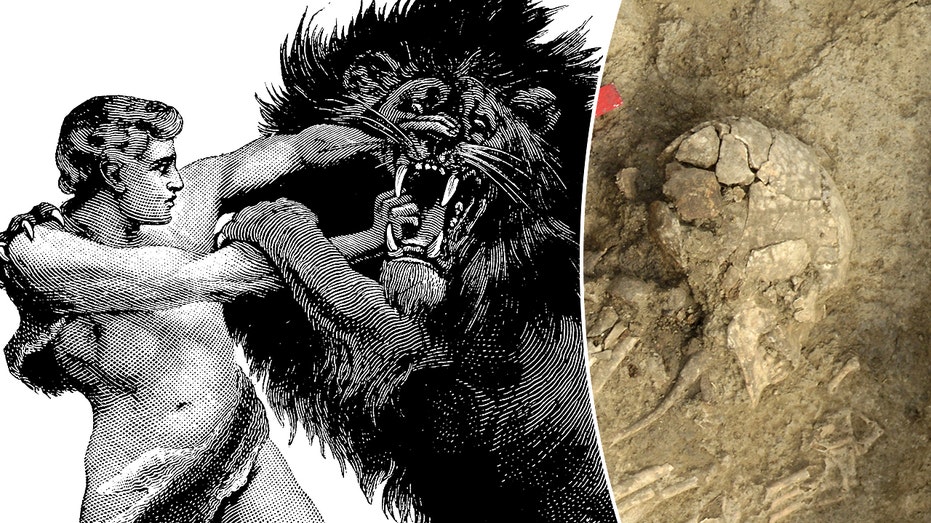
Six thousand years ago, a young man faced a terrifying ordeal – a brutal attack by a lion – and lived to tell the tale. His remains, recently unearthed in eastern Bulgaria, offer a stunning glimpse into a world where humans and large predators clashed, and where survival often depended on the strength of community.
The discovery centers around a Late Eneolithic necropolis near the Black Sea coast, a region known to have been inhabited during the period between 4600 and 4200 B.C. The man, estimated to have been between 18 and 30 years old at the time of his death, stood over 5 feet 7 inches tall, a considerable stature for his time.
What sets this skeleton apart are the unmistakable signs of trauma. Researchers identified severe injuries to the skull and limbs, including distinct puncture wounds – wounds consistent with a large carnivore attack. But remarkably, these wounds show evidence of healing, indicating the man survived the initial encounter.
The attack likely occurred during his adolescence, perhaps between the ages of 10 and 18. Paleontological evidence confirms that lions roamed eastern Bulgaria during the Late Eneolithic, making such an encounter a chillingly realistic possibility. Over fifteen lion remains have been found at prehistoric sites across Bulgaria, some even bearing marks of human interaction.
Such skeletal evidence of prehistoric animal attacks is exceptionally rare, offering a unique window into the dangers faced by early humans. The cranial injuries sustained by this man would have likely caused lasting neurological consequences, potentially including seizures.
His survival for months after the attack is a testament to his resilience, but also speaks volumes about the social structures of the time. The severity of his injuries would have rendered independent survival impossible, suggesting he received prolonged care and support from his community.
Intriguingly, the man’s grave is remarkably simple, lacking the elaborate grave goods found in nearby, wealthier burials. This stark contrast with the opulent Varna Eneolithic Necropolis, famous for its early gold artifacts, highlights the social diversity of the period.
Despite the wealth inequality evident in burial practices, this man’s story reveals a society capable of compassion and care for its vulnerable members. His survival, and the support he received, provides a rare and poignant insight into the social fabric of Eneolithic life.
This discovery isn’t isolated. Last year, a skeleton unearthed in a Roman cemetery near York, England, also bore the telltale signs of a lion attack, demonstrating that encounters between humans and these powerful predators occurred across vast geographical areas and throughout history.